
Mode guide
Audio Reaction Time Test: Measure Sound Reflex Speed
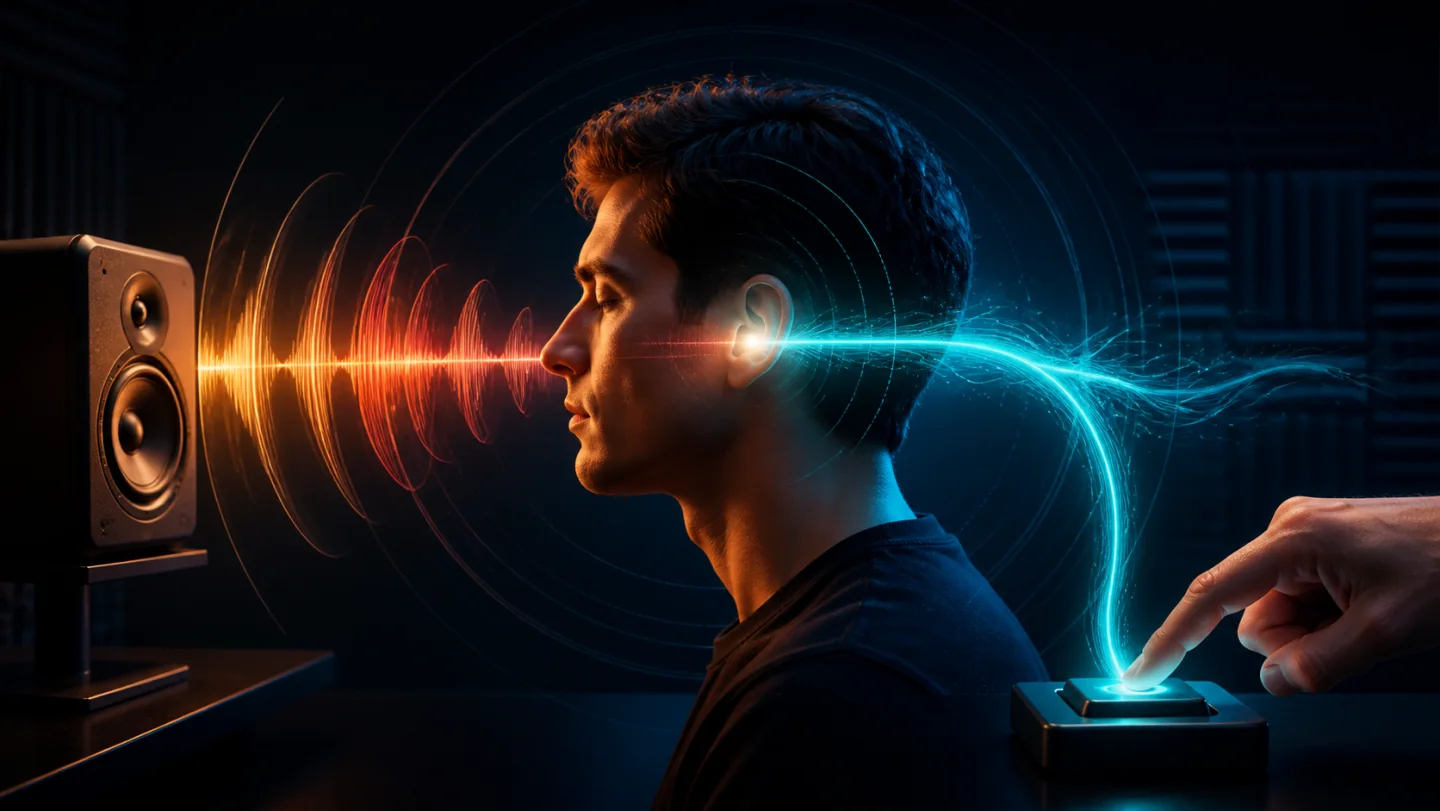
An audio reaction time test measures how quickly you respond to a sound cue. Instead of waiting for a color change, you listen for a beep and click, tap, or press a key as soon as you hear it.
To put this topic in context, compare it with the visual reaction time test, try the reaction time score comparison, and follow the practical reaction-time training plan. The reaction time guide library connects every benchmark and test mode.
Why audio and visual scores can differ
Controlled simple-reaction studies often record different response times for auditory and visual cues, but the size and even practical usefulness of that difference depend on the task, stimulus, attention, and equipment. A browser test also includes cue-delivery delay, so an audio result should not be treated as a direct measurement of neural processing speed or compared with a visual result as though both cue paths were calibrated.
Audio vs visual reaction time
Visual reaction tests depend on your screen, refresh rate, and how quickly you notice a color change. Audio tests depend more on sound output latency and how clearly you hear the cue. Compare both modes on the same device for the fairest result.
Bluetooth and audio latency
Wireless audio can add encoding, buffering, transmission, and decoding delay before a tone reaches your ears. The total varies widely by browser, operating system, codec, and device, so this site does not subtract a fixed Bluetooth estimate. A wired path usually removes the wireless portion, but it still does not make the result laboratory-calibrated. Consistency matters more than assuming one universal latency number.
How to get a fair audio reaction score
- Use the same headphones, speakers, browser, and device for each session.
- Set a comfortable volume before starting the test.
- Keep the room quiet so you can focus on the cue.
- Avoid guessing before the sound plays.
- Prefer a wired connection over Bluetooth when consistency matters more than convenience.
Frequently asked questions
Why is my audio score slower than my visual score?
It can reflect output latency, attention, hearing conditions, or ordinary attempt-to-attempt variation. The browser records when it schedules the tone, while speakers or headphones can delay when you hear it.
Do wired headphones test faster than Bluetooth?
A wired connection usually removes wireless encoding and transmission steps, but total delay still varies by device. For fair self-comparison, keep the same output path between sessions.
Can hearing ability affect the score?
Yes. Any reduction in hearing sensitivity, a very quiet volume, or background noise masking the cue can all delay the moment you actually perceive the sound, which shows up as a slower reaction time even though the underlying reflex is unaffected.
Try the audio mode inside the main Reaction Time Test, compare ranges in the score comparison guide, or learn how to improve reaction time.
Sources and measurement notes
These references explain the timing method and the limits of browser-based comparisons.