
Gaming guide
Reaction Time for Gamers: Reflex Speed and Aim Practice
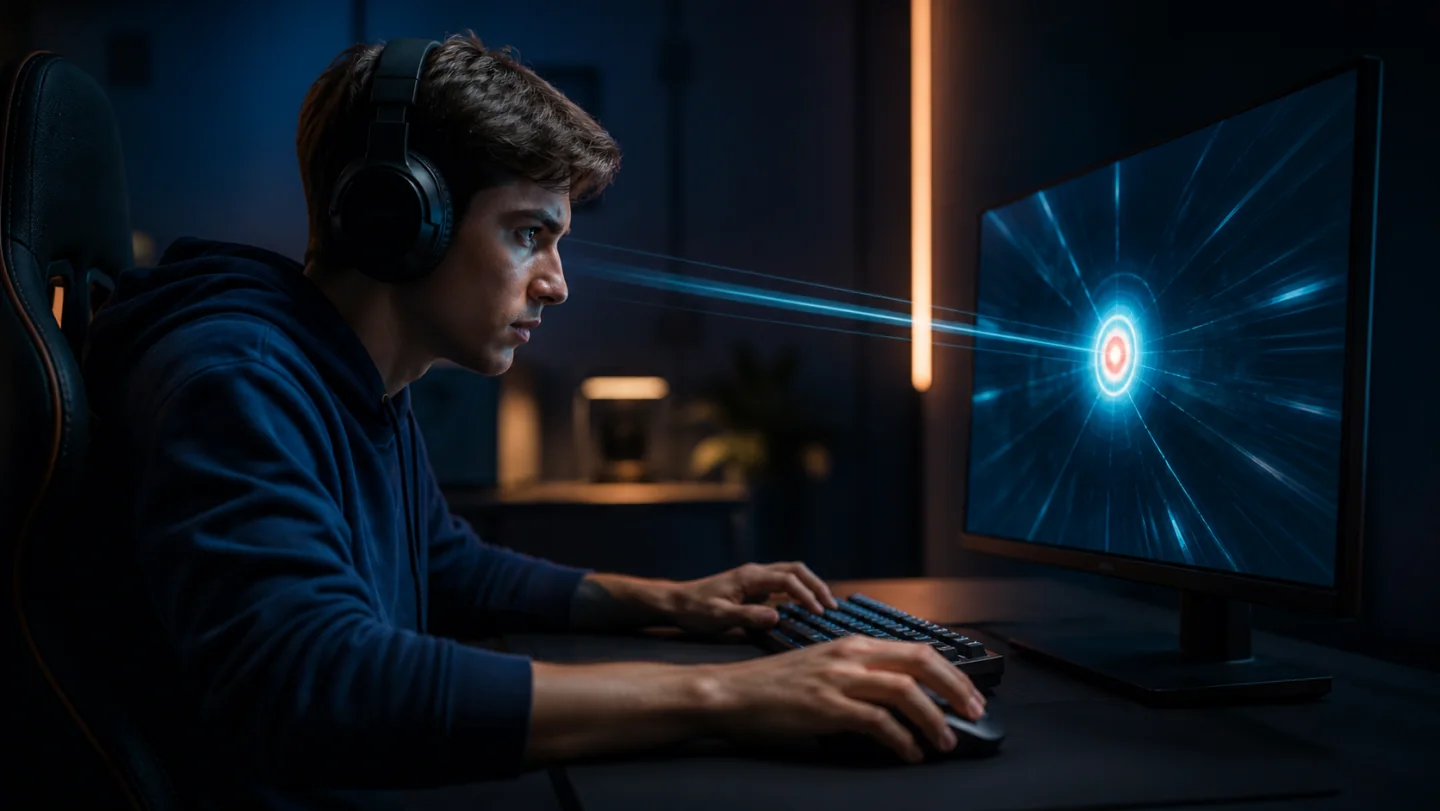
Reaction time matters in games, but it is only one part of performance. A reflex test measures how quickly you respond to a simple cue. Games also require aim, prediction, movement, decision-making, and map awareness.
To put this topic in context, compare it with the visual reaction time test, try the practical reaction-time training plan, and follow the reaction time score comparison. The reaction time guide library connects every benchmark and test mode.
Reaction time vs. aim: what's the difference
These two skills get mixed together constantly, but they are not the same thing. Reaction time is how quickly your nervous system detects a cue and starts a response. Aim is the precision and control of that response once it starts, tracking a moving target, correcting for recoil, and stopping the cursor exactly where you want it. A player can have a fast reaction time and mediocre aim, or slower reflexes and excellent aim built from repetition. Competitive performance usually depends on both, plus game sense that neither a reaction test nor an aim trainer measures on its own.
What reaction time tests measure for gamers
A simple test measures stimulus-to-response speed. It is useful for checking alertness, warming up, or comparing your own scores over time. It does not fully measure flick accuracy, target tracking, strategy, or game sense.
Hardware settings that affect competitive reaction
- Mouse polling rate. A higher polling rate (500-1000 Hz) reports position more often than the 125 Hz default on some devices, reducing the delay between a physical movement and the cursor responding.
- Monitor refresh rate. A 144 Hz or higher display shows new frames more often than a 60 Hz panel, shortening the window between something happening in-game and you being able to see it.
- V-Sync and display mode. V-Sync can add noticeable input lag in exchange for smoother frames; many competitive players turn it off, and a fullscreen exclusive mode is often lower latency than borderless windowed mode.
- Wired vs. wireless. Wired connections avoid transmission delay entirely, but modern low-latency 2.4 GHz wireless mice and keyboards can now match wired response times closely, so this matters less than it used to if you use gaming-grade wireless gear.
- DPI. DPI changes cursor sensitivity and precision, not reaction speed. Raising it will not make you react faster; it only changes how far the cursor travels per inch of movement.
Building a practice routine
- Use the same mouse, keyboard, monitor, and browser for comparable results.
- Practice visual, audio, aim, color, and F1-style modes to train different attention patterns.
- Keep sessions short so fatigue does not hide progress.
- Focus on consistency, not just one very fast score.
- Pair reflex practice with dedicated aim and tracking drills, since they train different skills.
Frequently asked questions
Do pro gamers have superhuman reaction times?
Not usually. Most professional players test within the normal human reaction range, often somewhat faster than a casual player thanks to practice and selection, but not dramatically outside it. Their advantage in-game comes more from anticipation, pattern recognition, and thousands of hours of mechanical repetition than from raw reflex speed alone.
Does more mouse DPI improve reaction time?
No. DPI controls how far the cursor moves per inch of physical mouse movement, which affects aiming sensitivity and precision, not how quickly your nervous system detects a cue and responds. Reaction time is better supported by polling rate and a low-latency connection than by raising DPI.
What reaction time do I need for FPS games?
There is no strict minimum. A simple visual reaction time in the 180-250 ms range is common among focused, practiced players, but consistency, tracking, and game sense matter as much or more than shaving the last few milliseconds off a reflex test score.
Try the main Reaction Time Test, read the visual reaction time guide, or compare your score with the reaction time score ranges.
Sources and measurement notes
These references explain the timing method and the limits of browser-based comparisons.